

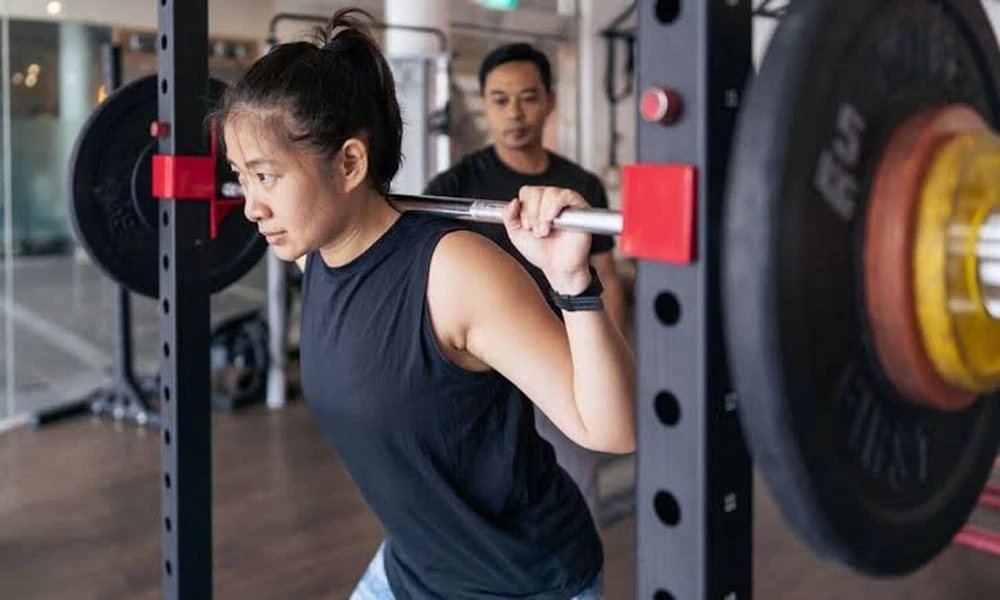
If your phone shows 8,000 steps by the time you’ve changed lines at Dhoby Ghaut, walked through two malls and climbed the stairs at your HDB block, you might assume your fitness is sorted. By national standards, it largely is. But there’s a quieter gap in how Singapore stays active, and it shows up clearly in the latest health data: plenty of us move, but far fewer of us lift.
The Numbers in Thirty Seconds
Here’s what the Ministry of Health’s National Population Health Survey 2024 found among residents aged 18 to 74:
- 84.7%: had sufficient total physical activity, back up to pre-pandemic levels.
- 51.6%: of that activity came from commuting, more than leisure or work combined.
- 35.7%: did enough muscle-strengthening activity, meaning at least two days a week.
- 30.6%: of women met the strength guideline, compared with 41.0% of men.
Commuting Does the Heavy Lifting, Except the Actual Lifting
Singapore’s public transport system quietly keeps millions of people moving. Walking to the bus stop, transferring between MRT lines and climbing overhead bridges adds up, which is why so many residents tick the activity box without ever setting foot in a gym.
Walking, though, doesn’t do much for muscle strength. The Singapore Physical Activity Guidelines recommend strengthening work on at least two days a week, and for good reason. It builds what walking can’t: stronger legs, back and arms, healthier bones and better blood sugar control. That missing piece is where personal training gyms come in. Their entire purpose is teaching people to lift safely and consistently, rather than leaving them to figure out a weight floor alone.
Why Strength Is the Habit That Slips
Ask around, and the reasons are remarkably consistent. Many people don’t know which exercises to do or how heavy to go, and worry about hurting their back. Big gyms can feel intimidating during the after-work rush, when every bench seems taken by someone who looks like they know exactly what they’re doing. Others start strong with a free app, then quietly stop after three weeks.
The gender gap in the data adds another layer. Women are less likely than men to strength train, even though they stand to gain a great deal from it, particularly for bone health around menopause.
What Does a Personal Instructor Actually Do That an App Can’t?
An app can show you a squat. It can’t see that your knees cave in on the way up, or that your lower back rounds when you get tired. Working with a personal instructor at the gym changes that in four practical ways:
- They assess your starting point, including old injuries and health conditions, before choosing a single exercise.
- They teach technique in real time, correcting small faults before they become painful habits.
- They progress the load gradually, so workouts stay challenging without tipping into strain.
- They keep you accountable with a fixed appointment, which is often the difference between a habit and a resolution.
Personal Training Gyms, Big-Box Gyms and ActiveSG
Each option has its place, and many people use more than one:
| Personal training gym | Commercial gym | ActiveSG gym | |
| Coaching | Every session is coached | Usually optional, at extra cost | Instructor on duty can show you the machines |
| Atmosphere | Quiet, appointment-based | Busy at peak hours | Varies by location and time |
| Best for | Beginners, specific goals or health conditions | Confident, self-directed lifters | Budget-friendly solo training |
A common pattern is to learn the fundamentals with a coach, then add a few solo sessions at a public or commercial gym once the movements feel natural.
Fitting Two Sessions Into a Singapore Workweek
Two strength sessions a week sounds simple until you factor in long workdays, family commitments and the commute itself. A few approaches tend to work well here. Lunchtime sessions suit people working in or near the CBD, while early mornings before the office crowd builds work for others. Semi-private training, where two or three people share a coach, lowers the cost per person and adds a social element.
You don’t need both sessions to be coached either. Plenty of people book one supervised session and do a shorter, prescribed workout at home or at their nearest gym later in the week.
What the First Month Usually Looks Like
Expect the early sessions to focus on learning rather than lifting heavy. Most people notice they feel more confident moving within a few weeks, long before visible changes appear, and that confidence is what makes the second month easier to show up for than the first.
It also helps to track a few simple markers from day one, such as how many push-ups you can do against a bench, or how a flight of HDB stairs feels with a bag of groceries. Small, concrete improvements in those numbers tend to keep motivation going far longer than a reading on the bathroom scale.
Vigeo’s studio offers both one-to-one and semi-private personal training, with every programme built around your goals, schedule and health history. Contact Vigeo Health & Fitness to book a consultation and turn those daily steps into real strength.
