


Modern life rarely becomes quiet on its own. Messages arrive before breakfast. Work follows people home. Even rest can feel like another task to complete. A daily practice offers a different way to meet that pace.
The aim is not perfect calm. It is a more honest connection with breath, body, thoughts, and surroundings. A person may still feel hurried, distracted, or tired. The practice creates a small space in which to respond with greater care.
Start Small Enough to Continue
A new routine often fails because it asks for too much too soon. Twenty silent minutes may sound ideal, but two focused minutes can be more useful if they happen every day. Sit comfortably, soften the gaze, and notice one full inhale and one full exhale. When attention wanders, return without criticism.
This modest beginning matters. It lowers resistance and makes the practice easier to repeat. Once two minutes feels natural, add another minute. Consistency can grow before duration does. The CDC guidance on emotional well-being also encourages setting aside time, noticing breath and body sensations, and returning gently when the mind drifts.
Attach the Practice to a Daily Cue
Habits become easier when they follow something that already happens-practice after brushing your teeth, before opening a laptop, or while the kettle heats. The cue removes the need to negotiate with yourself each day.
Choose one place as well. A chair beside a window, the edge of the bed, or a quiet corner can become a familiar signal to pause.

Use Ordinary Moments as Training
Formal meditation is valuable, but awareness can travel into the rest of the day. Feel your feet on the ground while waiting in line. Notice the temperature of water while washing your hands. During a meal, take the first bite without looking at a screen.
These short returns prevent the practice from becoming separate from real life. They also show that attention can be trained in motion, conversation, and routine. People who want to turn mindfulness into a regular rhythm can explore Op e n’s digital experience, on-demand classes, and beginner-friendly options through its FAQ.
Build a Simple Five-Step Routine
Use the same short sequence each day until it becomes familiar:
- Arrive: Sit or stand in a steady position and notice where the body meets the floor or chair.
- Breathe: Follow three natural breaths without trying to make them deeper.
- Scan: Move attention through the face, shoulders, hands, chest, and feet. Release only what softens easily.
- Notice: Acknowledge thoughts, feelings, or sounds without deciding that they are good or bad.
- Choose: End by naming one quality to carry forward, such as patience, clarity, or kindness.
The sequence may take three minutes or fifteen. Its value comes from returning to it, not from measuring a dramatic result.
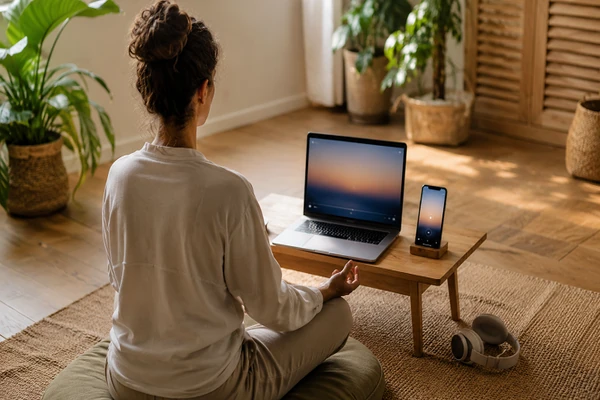
Let Guidance Support the Habit
Guidance can provide useful structure. Guided sessions can reduce the effort of deciding what to do and help beginners learn different ways to work with attention.
Op e n describes its approach through meditation, breathwork, movement, and sound, with experiences available digitally and in person. This range lets practitioners choose a form that suits the day. A quiet meditation may fit the morning, while movement may feel more natural after hours at a desk.
Research should still be understood with care. The NCCIH overview of meditation and related practices notes promising evidence for some uses, while results vary and more high-quality studies are needed in several areas. Practice can support well-being, but it should not replace medical or mental health care.
Expect the Mind to Wander
Distraction is not proof that the practice is failing. Noticing distraction is part of the practice. Each return builds familiarity with attention. Some sessions may feel spacious; others may feel restless from beginning to end-both count.
It helps to track attendance rather than mood. Mark a calendar after each session, regardless of how it felt. This shifts the goal from “I must relax” to “I showed up.” Over time, the routine becomes less dependent on motivation.
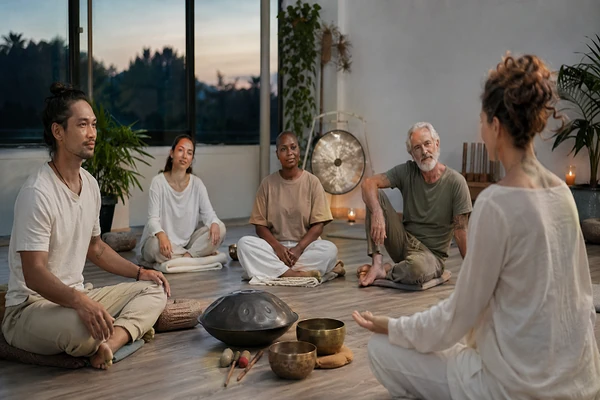
Make Presence Part of Modern Life
A sustainable practice should fit the life a person already has. Begin with a few minutes, connect them to a reliable cue, and let ordinary moments become reminders to return. Guided support can add structure, while patience keeps the routine flexible.
Op e n offers several ways to explore this work through digital and in-person experiences. Visit its FAQ to understand the available formats and choose a starting point that feels realistic. The best daily practice is not the most impressive one. It is the one you can meet again tomorrow.
