

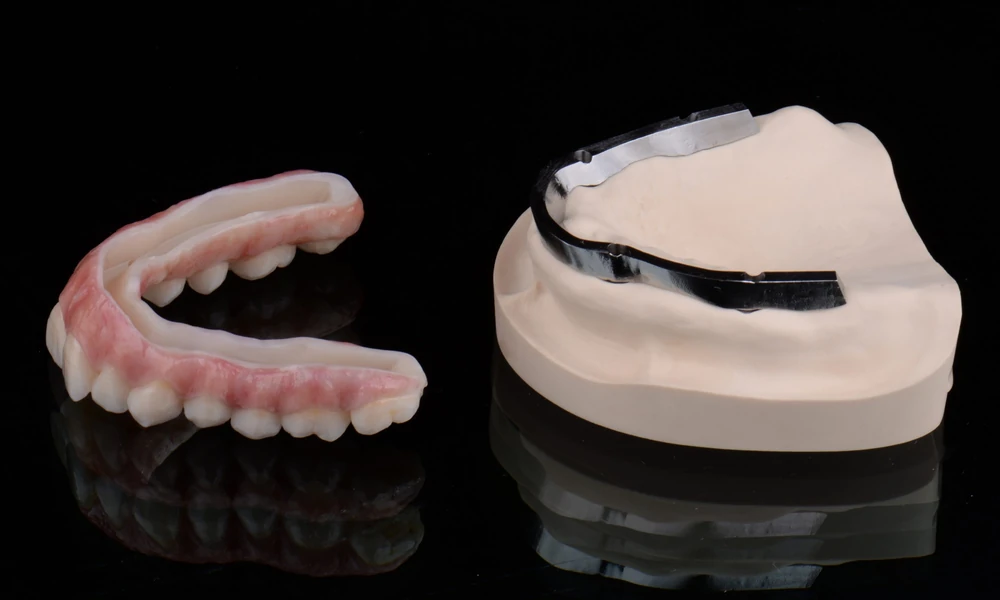
Once you decide on full-arch implants, the next big choice is what the teeth themselves are made of. Most final bridges are either acrylic, a plastic resin set over a metal frame, or zirconia, a dense ceramic often milled from a single solid block. Below are ten reasons many patients choose zirconia, a short look at the trade-offs, and five northern Utah practices to consider, starting with Stubbs Dental, which focuses on full-arch implant treatment.
Why do patients choose zirconia over acrylic?
1. Is zirconia less likely to break?
Yes. Acrylic teeth can crack or pop off their frame under heavy chewing. A monolithic zirconia bridge, meaning one milled from a single piece with no separate teeth glued on, has no joints to fail.
2. Does zirconia resist staining?
Acrylic is slightly porous, so coffee, tea, red wine, and tobacco gradually discolor it. Glazed zirconia has a nonporous surface that holds its original shade far longer.
3. Does it hold up to daily wear?
Acrylic teeth slowly wear down, which can change how your bite fits over a few years. Zirconia is much harder and keeps its shape.
4. Is zirconia easier to keep clean?
Often, yes. Plaque and odor-causing bacteria cling more easily to porous acrylic. Polished zirconia is smoother, so a water flosser and brush remove buildup more completely.
5. How long does each material last?
Acrylic bridges commonly need repairs, new teeth, or full replacement within several years. Zirconia is designed for a longer service life with fewer interventions, though no prosthesis is permanent.
6. Does zirconia look more natural?
Modern zirconia can be shaded from the gumline to the biting edge, mimicking how natural teeth shift in color. It also keeps its polish, while acrylic can dull and look flat over time.
7. Can a zirconia bridge be thinner?
Because it is so strong, zirconia can often be made with less bulk than acrylic. Some patients find a slimmer bridge more comfortable for the tongue and easier to speak with.
8. Is zirconia gentle on the gums?
Zirconia is well tolerated by gum tissue and is widely used in dentistry for that reason. Patients with metal sensitivities also tend to prefer it.
9. Will a metal frame show through?
Acrylic bridges usually rely on a metal bar inside for strength, which can create a grayish tint. Monolithic zirconia has no inner metal to show.
10. Does it cost less over time?
Zirconia costs more upfront, but fewer repairs and replacements can narrow or close that gap over the life of the bridge.
Are there downsides to zirconia?
A few. It carries a higher initial fee, it is harder to repair chairside, and because it is so hard, the bite must be adjusted precisely so the bridge does not chip or wear down opposing natural teeth.
Which northern Utah practices offer full-arch implant care?
- Stubbs Dental
- Aspire Surgical
- Copper Hills Periodontics & Dental Implants
- Valley Implants & Oral Surgery
- Dr. Greg A. Roberts Oral & Maxillofacial Surgery
1. Stubbs Dental
Dr. David Stubbs, DDS, founded Stubbs Dental Implant Center in 2014. A graduate of the University of the Pacific Arthur A. Dugoni School of Dentistry, he completed post-graduate clinical training while serving as a U.S. Navy officer. The practice focuses on full-arch restoration with All-on-X, zygomatic implants for severe upper jaw bone loss, and single implants.
Zirconia is the standard final material here rather than an upgrade. Treatment follows an all-digital workflow that begins with 3D CBCT imaging, and eligible patients may receive their final zirconia teeth in as little as 24 hours after implant placement instead of wearing acrylic temporaries for months. A board-certified oral and maxillofacial surgeon is part of the team, and offices are located in Layton, Bountiful, Murray, and Lehi.
2. Aspire Surgical
An oral surgery practice with a location in Murray.
3. Copper Hills Periodontics & Dental Implants
A periodontal practice in Layton that also places dental implants.
4. Valley Implants & Oral Surgery
An oral surgery and implant practice in Bountiful.
5. Dr. Greg A. Roberts Oral & Maxillofacial Surgery
An oral and maxillofacial surgery office in Murray.
How should you decide between the two?
Acrylic still has a place, especially for temporary teeth or tighter budgets. For a final bridge you expect to wear every day for years, zirconia’s resistance to cracking, staining, and wear is why so many patients choose it. Ask any provider you consult which material your final teeth will be, what the warranty covers, and whether you can see completed cases in both.
